
Thiruvananthapuram: Agricultural technology is emerging as another area of startup activity in Kerala, with KERA Agrinext committing more than ₹3 crore in financial assistance to 39 agritech startups.
The initiative, part of the World Bank-supported Kerala Climate Resilient Agriculture Value Chain Modernisation (KERA) project, aims to support technology-driven agricultural solutions with the potential to benefit around 40,000 farmers.
The funding structure offers a glimpse into how Kerala is extending startup support beyond conventional technology sectors to address challenges in agriculture.
Under KERA Agrinext, seven selected startups will receive ₹25 lakh each, while another 32 startups will get financial assistance of ₹4 lakh each. The combined allocation amounts to ₹3.03 crore.
The initiative is being implemented by Kerala Startup Mission (KSUM), with the objective of encouraging startups to develop innovative solutions for the agricultural sector.
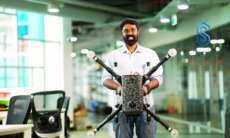
One of the startups selected for support, Graphical Innovations, is working on a robotic vegetable grafting system.
The technology combines precision robotics and computer vision to automate seedling production, an application that brings automation into an area traditionally dependent on manual processes.
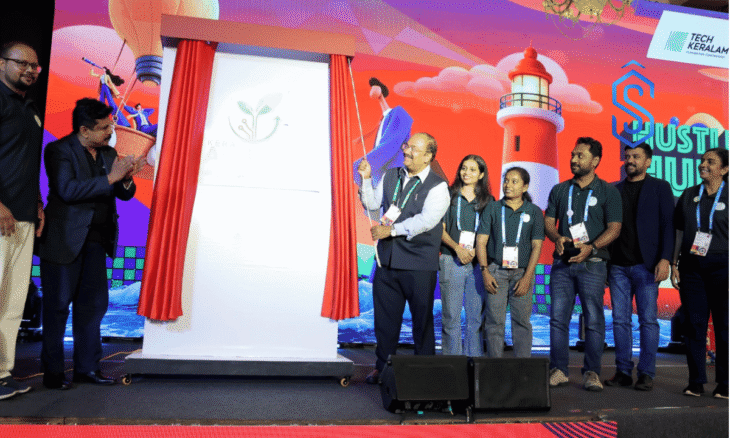
The KERA Agrinext logo was unveiled by Ramanan Ramanathan, Mission Governing Board Member of the India AI Mission, during the valedictory session of Huddle Global 2026.
Ashok Kurian Panjikkaran, Programme Head of the KERA Project Implementation Unit, was also present.
Kerala Startup Funding Ecosystem Looks Beyond Conventional Technology
The KERA Agrinext funding announcement comes amid a broader push to expand Kerala’s startup ecosystem through investment, incubation and industry participation.
The eighth edition of Huddle Global 2026, organised by Kerala Startup Mission, brought together around 10,000 participants, including more than 4,000 startups, over 90 venture capital investors and more than 50 angel investors.
The event saw investment announcements worth ₹8 crore, alongside funding developments involving startups across different sectors.
Deeptech aerospace startup Tessat Space raised ₹1 crore in its angel funding round from Xylapay, a blockchain-powered cross-border payment platform.
Interestingly, the discussions between the two companies began through Connect, a funding programme organised during Huddle Global 2025. The investment outcome was announced at the latest edition.
Another investment announcement involved Bustler, a Kerala-based startup developing a Skill Identity Platform.
Tevanova Incubation and Research Facility (TIRF), an emerging incubation and research ecosystem in Palakkad, will invest ₹50 lakh in the startup’s seed round.
Bustler’s platform is focused on human skills and skill identities in the age of artificial intelligence.
These developments reflect the range of sectors represented in Kerala’s startup ecosystem, from aerospace and blockchain-enabled financial services to agricultural technology and skill platforms.
Investor interest extends to early-stage startups
Beyond direct investment announcements, Huddle Global 2026 also provided opportunities for startups to engage with potential investors.
The Group of Technology Companies (GTech), the industry body representing technology companies in Kerala, issued Expressions of Interest (EOIs) for funding to four startups during its Cheque Mate investor pitching session.
The selected startups were Leadmetrics, Cloudpositive, Zeev (ZSS Technologies) and Spacetime 4D.
Meanwhile, CDISC Technologies, Sixdots Design and Kalqy were selected through the Tiger’s Claw pitching session. The three startups earned an opportunity to participate in the GITEX Dubai expo without paying participation fees.
The event also recognised student-led entrepreneurial ventures through the first cohort of the Student Unicorn Programme (SUP).
Team BharatWorks won the first prize of ₹1.5 lakh, followed by Eldora, which received ₹50,000, and Tattvic Labs, which secured ₹25,000.
KSUM expands support for direct-to-consumer startups
Alongside its funding and investment initiatives, Kerala Startup Mission is preparing to expand its support for direct-to-consumer businesses.
The organisation announced a D2C Accelerator programme scheduled to begin in January. The one-year programme will select 10 direct-to-consumer startups and provide structured mentoring, grants and seed investment.
Applications will open on December 15.
The programme was launched by Ramanan Ramanathan and KSUM CEO Anoop Ambika during the Huddle Global 2026 valedictory session.
From AI and robotics to sustainable energy: What Kerala’s startup ecosystem is building
The diversity of startups and technologies showcased at Huddle Global 2026 highlighted the expanding range of innovation areas attracting entrepreneurial interest.
The exhibition featured products and solutions across EduTech, HealthTech, FinTech, Life Sciences, SpaceTech, Artificial Intelligence and Machine Learning, Blockchain, Robotics, AR/VR, Internet of Things, GreenTech and e-Governance.
Humanoid robots, autonomous drones, sustainable energy solutions, biomedical devices and smart city technologies were among the innovations on display.
The three-day event, held at The Leela Kovalam, a Raviz Hotel, also facilitated more than 200 startup-investor meetings and saw the launch of over 27 products.
Speaking at the valedictory session, Ramanan Ramanathan urged entrepreneurs to be bold in developing imaginative solutions using artificial intelligence, describing AI as no longer just a technology but a capability.
KSUM CEO Anoop Ambika said Huddle Global has evolved into Kerala’s technology conclave over the years, adding that the organisation aims to transform it into a global event in the coming years.